

How to develop speech in a child with autism spectrum disorder? Practical tips for parents and specialists, plus recommended aids.
A child’s speech development can unfold very differently, especially when we are talking about children with autism spectrum disorder.
Many parents ask themselves – how can I help my child start speaking, understand their surroundings and communicate more easily?
The good news – the right aids and games can help a great deal.
🟩 Why is developing speech more difficult?

Children with autism spectrum disorder are often characterised by:
- finding it harder to understand speech
- a shorter attention span
- more difficulty linking a sound to its meaning
👉 That is why it is important to choose clear, structured and visual aids.
🟩 Which methods work best?
Specialists recommend:
✔ repetition
✔ a clear structure
✔ visual material
✔ linking sounds and images
👉 This is exactly why educational games become one of the most effective aids.
🟩 Garsų loto (Sound Lotto) – one of the most effective aids
Garsų loto helps a child to:
- recognise sounds
- link them to an image
- learn through play
This is especially useful for children who find it hard to start speaking.
👉 We recommend trying the one we created:
Garsų loto “Mano Namai” (My Home)
🟩 Sensory work – why is it so important for a child?
Developing speech is not only about words.
Children, especially those with developmental differences or autism spectrum disorder, get to know the world through their senses.
👉 That is why it is very important to include sensory elements:
👋 Touch (tactile work)
A child learns through their hands.
For example:
- textured cards let them feel a surface
- a ball can be not only seen but also felt
- natural objects are conveyed through different textures
👉 This helps to understand and remember information better.
👂 Hearing
Sound recognition is one of the most important foundations of speech.
👉 This is exactly why aids such as Garsų loto allow children to:
- hear
- recognise
- link to an image
This is especially effective for children who do not yet speak.
👃 Smells
Smells create an even stronger connection with information.
The child:
- remembers more easily
- links an experience with an emotion
- becomes engaged in learning
👉 Such sensory aids are often used by specialists.
🟩 Why does this work?
When a child learns through several senses at once:
✔ information is remembered faster
✔ concentration improves
✔ speech forms more easily
👉 That is why AKROS educational games and the aids we offer are created on exactly this principle.
🟩 Why is structured learning important?
Children with autism spectrum disorder learn best when:
- the activity is clear
- it is repeated
- it has a beginning and an end
👉 That is why aids such as AKROS educational games are highly valued by specialists.
🟩 How to play with your child at home?
A few simple tips:
- speak in short, clear sentences
- repeat words
- point and name
- encourage the child to respond
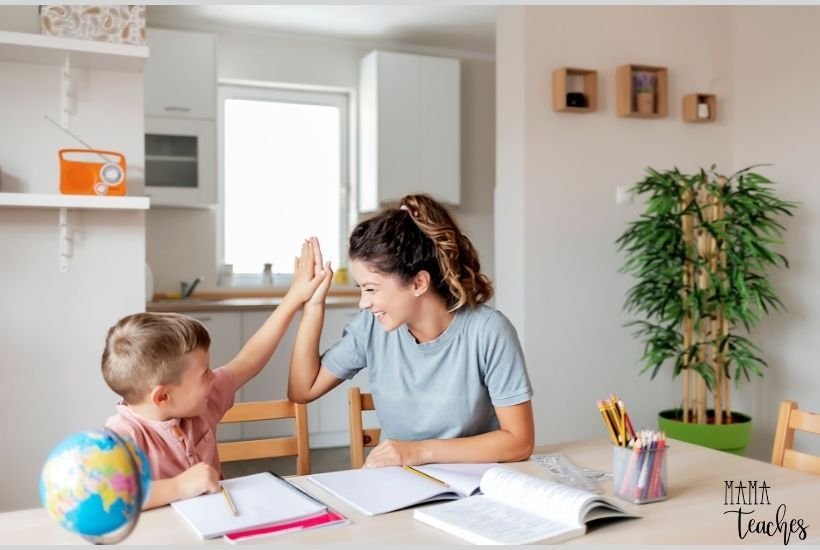
👉 even 10–15 minutes a day can produce a big result
🟩 When is it worth turning to a specialist?
If your child:
- does not speak or speaks very little
- does not respond to their name
- avoids eye contact
👉 it is worth consulting a speech and language therapist or specialist
🟦 CONCLUSION
Every child is unique, but consistent work and the right aids can help achieve great progress.
The most important things are patience and the right method.
🟧 Where to find the right aids?
If you are looking for aids that genuinely help:
👉 Browse our educational games:
👉 Try the Garsų loto game:
Different levels of speech development on the autism spectrum
Autism spectrum disorder (ASD) covers a very wide range of differing abilities. Some children with ASD develop speech later but catch up with their peers. Others do not communicate with words at all and use alternative communication methods. That is why it is important to understand a particular child’s level of development and to choose the most suitable aids accordingly.
Together with a speech and language therapist, draw up an individual plan – establish the child’s current level of communication and clear short-term goals. Every small step matters and is valued.
The importance of visual support
For children with ASD, visual information is often far more understandable than verbal information. Visual support aids – pictures, cards, sequence diagrams – help the child understand what is expected of them and reduce their level of anxiety.
- Daily routine cards – visually show the structure of the day, reduce anxiety and help the child prepare for transitions.
- Choice cards – instead of asking verbally, we show two pictures and the child chooses what they want.
- Emotion cards – help the child recognise and name feelings that are often hard to put into words.
Structured games as a foundation for communication
Structured games with clear rules help children with ASD understand the sequence of actions and each participant’s role. This creates a sense of security and lets the child take part more actively.
Sequencing games with pictures are especially effective – the child sees visually what happens first and what comes next. This develops not only speech but also an understanding of cause and effect and of narrative.
How to talk with a child who has ASD?
Strategies for communicating with a child with ASD differ from the usual ones. Here are a few principles recommended by specialists:
- Speak briefly and clearly – avoid long sentences and idioms.
- Give the child time to respond – do not rush them or repeat the question too often.
- Use the child’s name at the start of the sentence to draw their attention.
- Accompany words with gestures or pictures.
- Praise even small efforts – positive reinforcement is very important.
Sensory games as a supporting aid
Many children with ASD have sensory processing differences – they may be overly sensitive to certain sounds, textures or light, or, conversely, seek more intense sensory stimulation. Sensory games help to regulate these senses.
Weights (shoulder loads, weighted pouches), tactile games with sand or foam, calming textures – all of these can help a child feel better and hold their attention for longer.
Where to seek help in Lithuania?
Several organisations in Lithuania provide help to families raising children with ASD. Speech and language therapists, special educators and occupational therapists can offer an individual plan and ongoing support. Do not hesitate to reach out – early intervention gives the best results.
In the “O. K. Žaislai” online shop you will find educational aids specially selected for work with children who have special educational needs. Sensory aids, visual routine cards and language-development games – you can buy all of these and use them at home.