

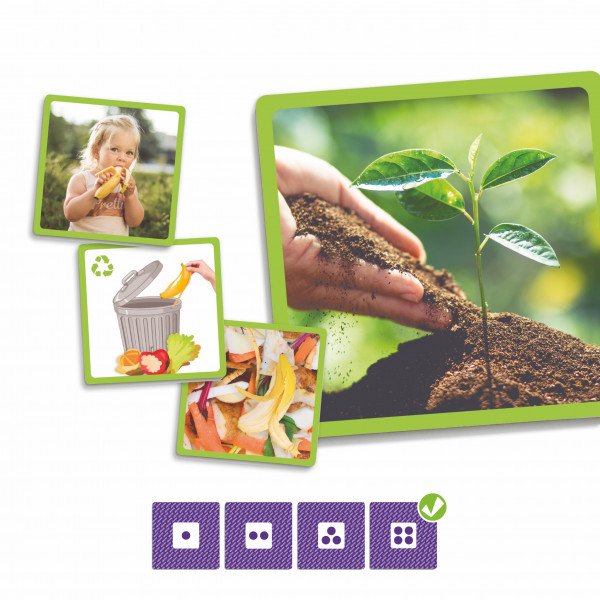
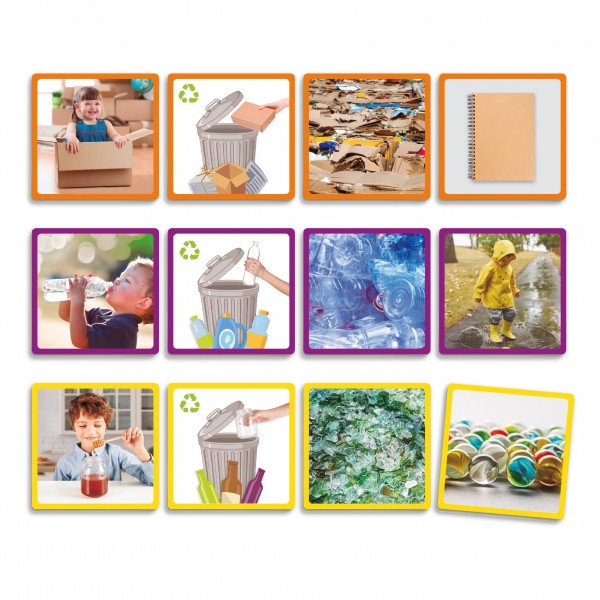
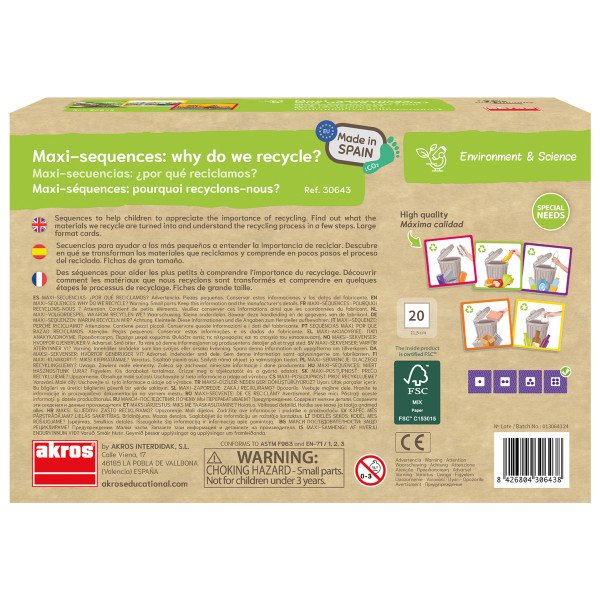
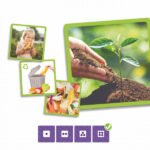
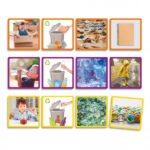
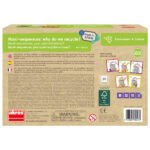

🎯 Where does a jar go once it has been dropped into the green bin? And what does an old newspaper turn into? “Maxi sequences: Why do we sort waste?” is a set of large-format sequence cards that show the recycling journey step by step: from a piece of waste to a new object. Once a child sees the whole process, the question “why bother sorting?” answers itself.
✨ What does this aid develop?
- Environmental awareness – the point of sorting becomes obvious;
- Logical thinking and sequencing – the stages of the process are lined up in the right order;
- Language – narrating a sequence develops connected speech;
- Attention – the details show which stage follows which.
🎲 How to play at home
Your child lays the cards out in the right sequence and traces how waste becomes new material, then tells the process in their own words. The best follow-up is practice: sort the week’s waste together and remember which sequence in the game each bin matches. Knowledge backed up by action stays for good.
🧑🏫 Tips for specialists
For teachers this is a ready-made environmental lesson: the large cards are easy for a whole group to see, and the sequence format joins ecology to the development of sequential thinking. For speech and language therapists, recycling sequences are rewarding material for connected narrative and cause-and-effect constructions (“for paper to be recycled, first you have to…”).
📦 What’s in the set
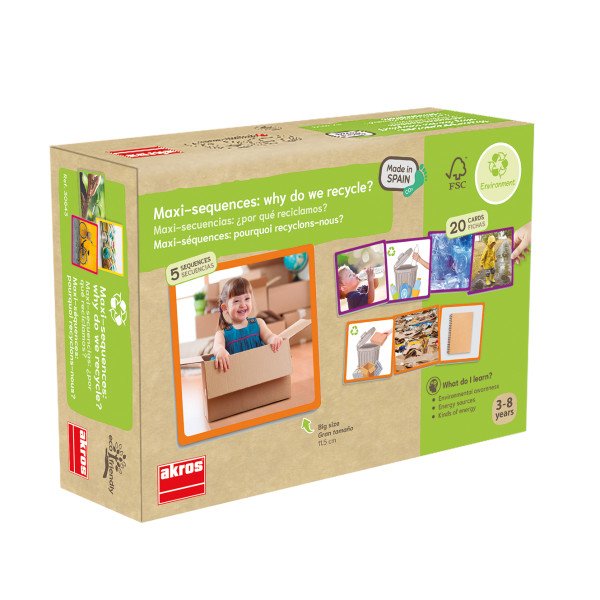
- 20 sturdy large-format cardboard cards (11,5 × 11,5 cm).
Please note: the game instructions may be in Spanish, but the game is simple and the clear pictures mean you can start playing straight away.
👶 Who is it for?
Recommended from 4 years. For nurseries, primary classes and families who already sort their waste – or want to start. An aid that grows care for the planet and explains that small everyday actions carry great meaning.
Reviews
There are no reviews yet.